IN THE SHADOWS OF UTOPIA
  • About
  • Episodes
  • Video Essays
  • Blog
  • Show Content
    • Dramatis Personae
  • Support
  • Lachlan

EPISODES

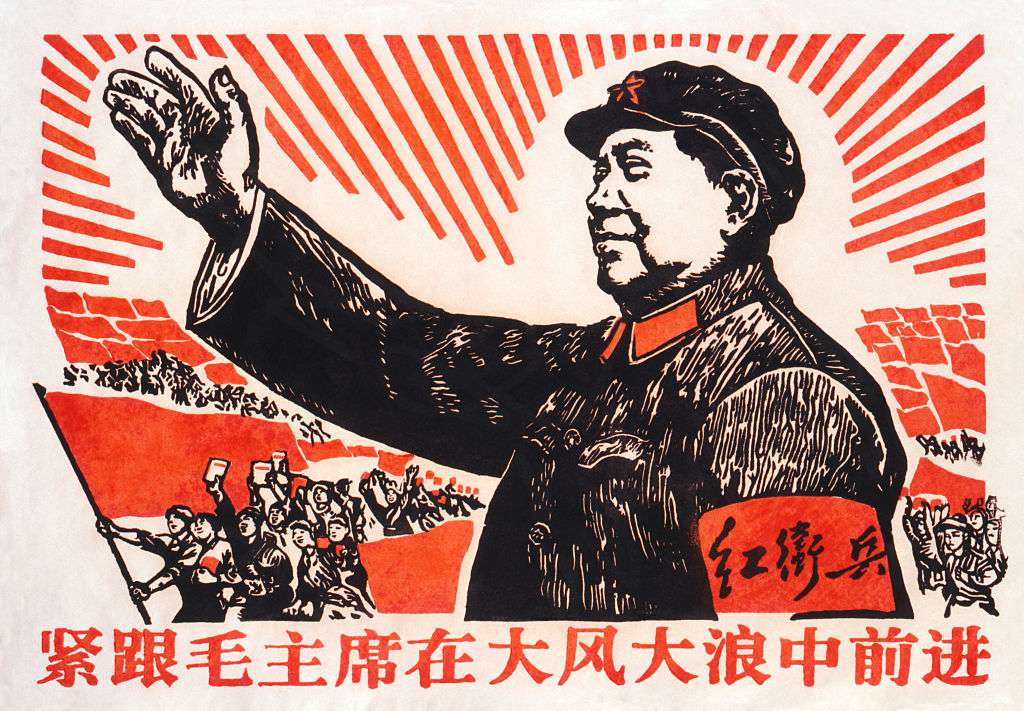
Mao's Great Proletarian Cultural Revolution

28/11/2023

2 Comments

 
Picture
What led to Mao's launching of a 'cultural revolution' in the People's Republic?

What were the aims of this movement?

Why did perhaps a million people die at the hands of their countrymen in less than four years?

Time Period Covered 1964 - 1969

In what could be considered a belated "Part Two" to the episode introducing Maoism and the Great Leap Forward, Lachlan revisits China and attempts to explain the "Cultural Revolution". Officially launched in 1966, this period of chaos, an example of a cult of personality being used to destroy a system and replace it with a kind of perpetual revolution, would lead China into a near state of anarchy.

Radical young Maoists, organised into groups of "Red Guards" terrorised those that they considered to be sufficiently counter to the ideological mandate set by Mao.

Philip Short Mao
Frank Dikotter The Cultural Revolution: A People's History
Andrew Walder China Under Mao
Richard Baum Lecture Series
2 Comments
Fred
16/5/2026 01:13:30 am

Really disappointing episode. The decision to rely on Dikotter as a major source is really not one I understand. Frankly, if I was going to come up with a list of common mistakes in CR historiography, it would be a lot like this episode:

1. Unwillingness to seriously investigate the reasoning behind the CR, and Mao’s theories more broadly. There is a real lack of analysis of why Mao’s ideas, even though there is an admission that he was a real ideologue. The portrayal of the revolutionary committees in particular is very weak, with no mention of the 3-in-1 structure, or the goal of mass supervision. Briefly, the idea of the committees was that they would join together rebel masses, reformed party cadres, and the PLA, to enable a kind of system of checks and balances, although in many cases this didn’t really work out. It all kind of grows out of the contradiction of both trying to carry out industrial development and social revolution, and represents Mao’s attempt to combine the two. An interesting source on this is Joel Andreas’ book Disenfranchised, which looks specifically at the industrial context.

2. Excessive focus on red guard and rebel atrocities. A large amount of time is spent on talking about red guards beating up teachers, smashing things, and the like, even though you yourself point out that this was actually only a relatively small part of the violence of this period. The “black period” killings receive a couple of minutes, despite being more numerous and systematic. Walder depicts this rather well in his book Agents of Disorder. Of particular note is the depiction of the violence in Guangxi, the majority of which was in fact carried out by the existing authorities against the province’s main rebel faction.

3. Portrayal of the CR as culturally void. Pang Laikwan’s book The Art of Cloning dispenses with this idea very well, and I highly suggest you read it. People found all kinds of ways to express themselves within the cultural framework of the period, as human beings are wont to do.

4. Beijing-centric thinking. Putting events in Beijing and central leadership under a microscope necessarily means neglecting the experiences of the vast majority of China’s population. Even Shanghai, a more consequential city in many ways, is given only an aside. Elizabeth Perry’s Proletarian Power is a good source on it, but to summarize, Shanghai was the largest place where the CR really “worked”, where there was a development of a new form of authority, where rebels were able to persist even after formal organizations were dissolved, etc.

As a last note, if you are interested in personal accounts from the period, I suggest a book called Mao’s Children in the New China.

Obviously, this topic is rather tangential to your focus on Cambodia, but I expect better from a real historian, which I am well aware that you are. I’m not writing this to attack you, I’m writing it because I know that you know how frustrating it can be when people accept popular narratives without sufficient investigation.

Reply
Lachlan
16/5/2026 01:51:09 am

Hi Fred, cheers for using the blog to post a comment ! Definitely the most in depth response we've had on here.

As for your criticism, unfortunately you kind of hit the nail on the head at the end there - this period of Chinese history, and China generally, is well out of my comfort zone.

As such I don't have the time or sources to go as deep as I would like on every tangential topic that does come up in the show, but the purpose of this episode was to set a stage of atrocity and chaos as, like the great leap forward episode years earlier, a kind of foreshadowing of only the things that will necessarily relate to the Cambodian case, as well as the effect that the cultural revolution had on international relations etc that also influenced the story in Cambodia.

In that instance it was Mao himself as central figure, the fervor of revolutionary youth if sufficiently indoctrinated (and the violence they were capable of), as well as the chaos as it bled into states like Cambodia in the mid 60s with various rallies etc worrying Sihanouk enough to fathom rapprochment with the US.

I relied on both Short and Dikotter, without being privy to the full spectrum of historiography on the period - I did use, in the case of Dikotter, a historian I knew would provide those aforementioned details that would support the primary narrative of the podcast, which is the Khmer Rouge.

I do hope one day I will have enough time to revisit this topic at my leisure as someone interested in history (I must pushback on the claim that I am a historian haha).

I'm sorry this episode didn't live up to that level, I do as you say know what it is like to see this in other places about issues relating to Cambodia and it is indeed frustrating.

I suppose my only defense would simply be that the point of the episode was to stress the chaos, the violence and the power of ideology. I would still go as far as to say that if people simply walked away with the idea that the cultural revolution wasn't very pleasant, then I would have achieved my aim.

I do hope there is a podcast out there taking the Maoist period as seriously as I am taking the Khmer Rouge, and that people are able to listen to an 8 hour series just on the cultural revolution which is what it surely deserves - just not on a podcast about Cambodia I'm afraid.

Thank you for taking the time to let me know, I take no offence, it is part of the job and I appreciate how this was worded.

All the best,
Locky

Reply


Leave a Reply.

    Categories
    ​

    All
    Angkor
    Cambodian Civil War
    Communism
    First Indochina War
    French Indochina
    Interviews
    Khmer Rouge Tribunal
    Modern History
    Pre Modern Cambodia
    Saloth Sar
    Second Indochina War


    Providers
    ​

    The show is available on all major podcast providers and YouTube. Just search for "In the Shadows of Utopia" on Apple Podcasts, Spotify, or wherever you listen.

    Visit Audioboom for a full list of listening options


    Credit
    ​

    All Episodes Written, Recorded and Produced by Lachlan Peters ​©

Proudly powered by Weebly
[object Object]
  • About
  • Episodes
  • Video Essays
  • Blog
  • Show Content
    • Dramatis Personae
  • Support
  • Lachlan